
North Square: Where Boston's History Lives On
Tucked away in Boston’s oldest residential historic neighborhood is North Square. This quaint corner of Boston’s North End is rich with history; numerous landmarks in and around this square tell many stories about Boston’s founding and evolution. Whether you are a tourist by day or a dinner guest by night, North Square is a must-see location!
Paul Revere House: 19 North Square
This historic home on the Freedom Trail marks a larger-than-life figure in American history. Paul Revere is most known from the famous 1860 poem by Henry Longfellow titled “The Midnight Ride of Paul Revere”. The well-known lines “Listen, my children, and you shall hear // Of the midnight ride of Paul Revere...” and “One, if by land, and two, if by sea” are recognizable to many Americans.
Though the poem chronicles the daring journey of Paul Revere, a messenger for the Sons of Liberty, it contains several inaccuracies in its description of the events of April 18th, 1775. Longfellow wrote this poem to inspire patriotism and to create a sort of American Hero during a period of high tension and turmoil in the United States, leading up to the outbreak of the Civil War in 1861. While well-known, the poem hardly enlightens the reader to the complexities of the man himself.
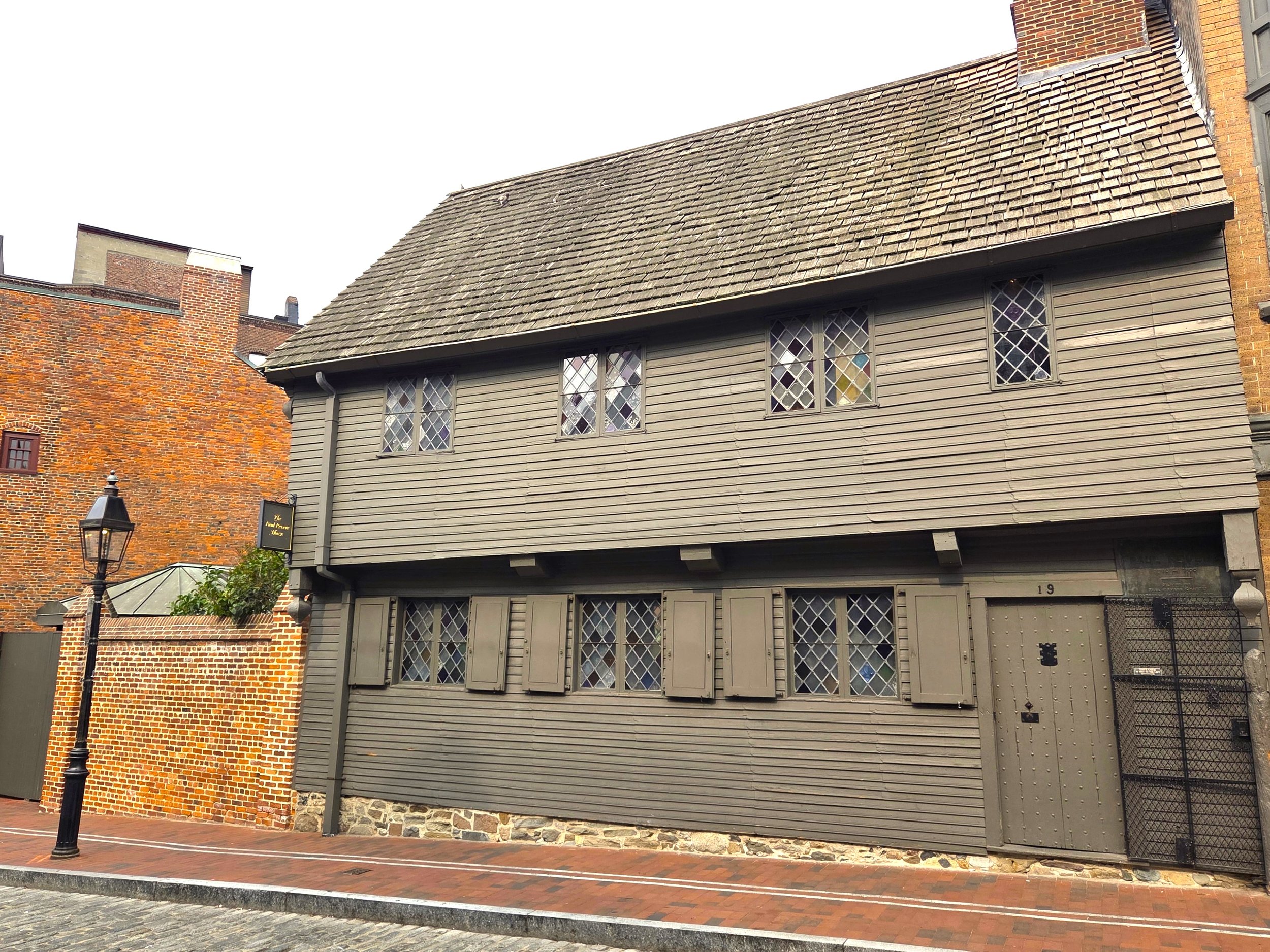
Two-level Paul Revere House from 1680
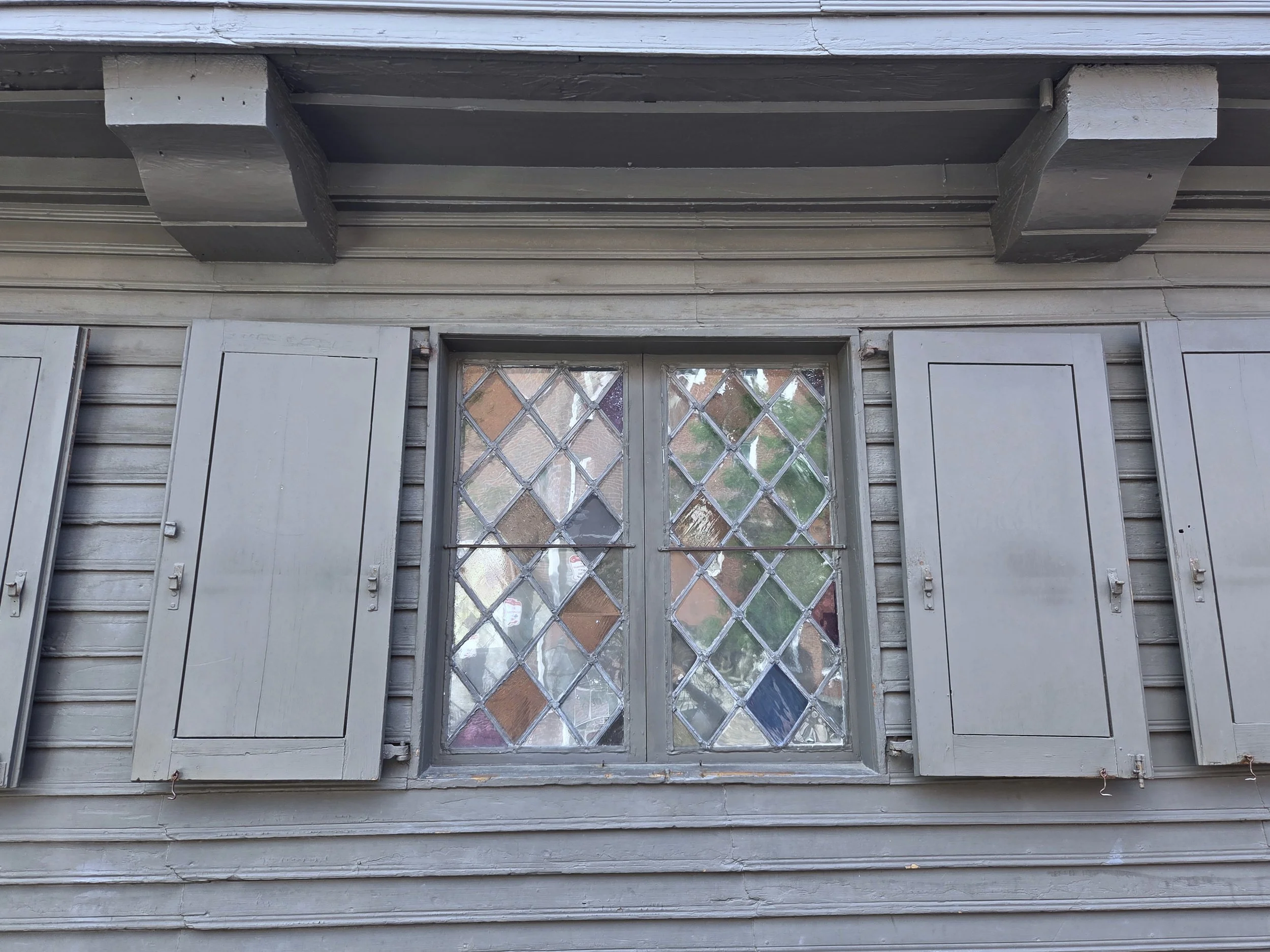
Aged glass windows of the Paul Revere House. Originally clear when installed!
Who was Paul Revere? Why is his house preserved as a museum?
In short, Paul was a jack-of-all-trades, adept at many crafts. His most well-known role was as a Courier for the Sons of Liberty. This role was part of the 1773 Messengers Network, established to carry critical information between colonial leaders. He was also a silversmith who created fine silver objects and an accomplished engraver, known for his detailed copper engravings, including political cartoons and propaganda during the American Revolution. His depiction of the Boston Massacre is the most famous image of the event, and played a role in fueling colonial resistance against British rule. He was a printer of Commonwealth money for the Massachusetts Bay Colony. He even established a successful foundry where he worked with copper and other metals, producing items such as ship components and cannons. Naturally, as a Son of Liberty, Revere was a patriot organizer and military officer who actively led colonial resistance, including coordinating intelligence efforts to monitor British troop movements, and served as a lieutenant colonel in the Massachusetts militia during the Revolutionary War.
After the Siege of Boston (1775–1776), Revere became an industrialist and established one of America's first successful copper rolling mills, making a significant contribution to the nation's industrial development. He also became known for casting church bells, and his foundry produced many notable bells in churches across Boston and New England.
To learn more about his personal and family life, you can visit the Paul Revere House and tour his home! You will learn about his parents, Huguenots who fled persecution in France, as well as his wife, Sara, and his second wife, Rachel, who together would bear 16 children with Paul.
In addition to the lives of the Revere Family who lived in the house, the home itself is storied and extremely interesting! It is one of the oldest buildings in this historic Boston neighborhood, dating back to 1680! This unique building is a must-see when visiting Boston, along with the adjacent North Square and the surrounding North End.
Pierce/Hichborn House: 29 North Square
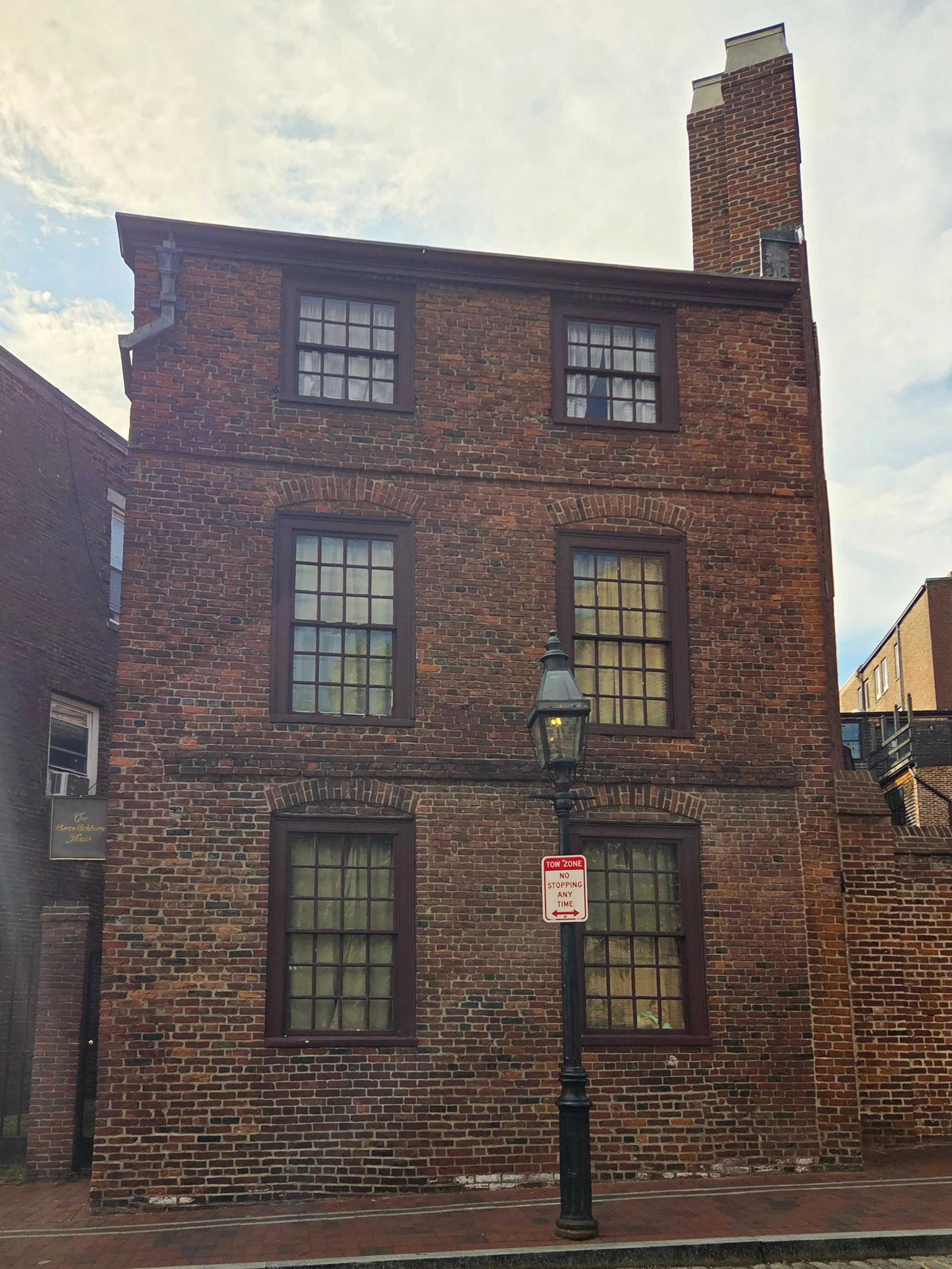
Just next door to the Paul Revere House is another noteworthy building in this historic neighborhood: the Pierce/Hichborn House. Though less well-known, it stands as one of Boston's earliest surviving brick buildings. This building is fascinating to see and is right on the Freedom Trail! Built in 1711 in the North End, the house is named after two former tenants:
Moses Pierce, a glazier specializing in window and door glass installation, commissioned this Georgian-style home for himself and owned the property from 1711 to 1747.
Nathaniel Hichborn, a boatbuilder and cousin of Paul Revere, became the owner of the house in 1781. The Hichborn family retained ownership until 1864.
Between the 1850s and 1940s, residents occupied the upper floors while the ground floor served as commercial space for tailors, barbers, and hairdressers. The house has since been restored and preserved as a museum, offering visitors a glimpse into 18th- and 19th-century domestic life.
Rachel Revere Square: 210 North Street
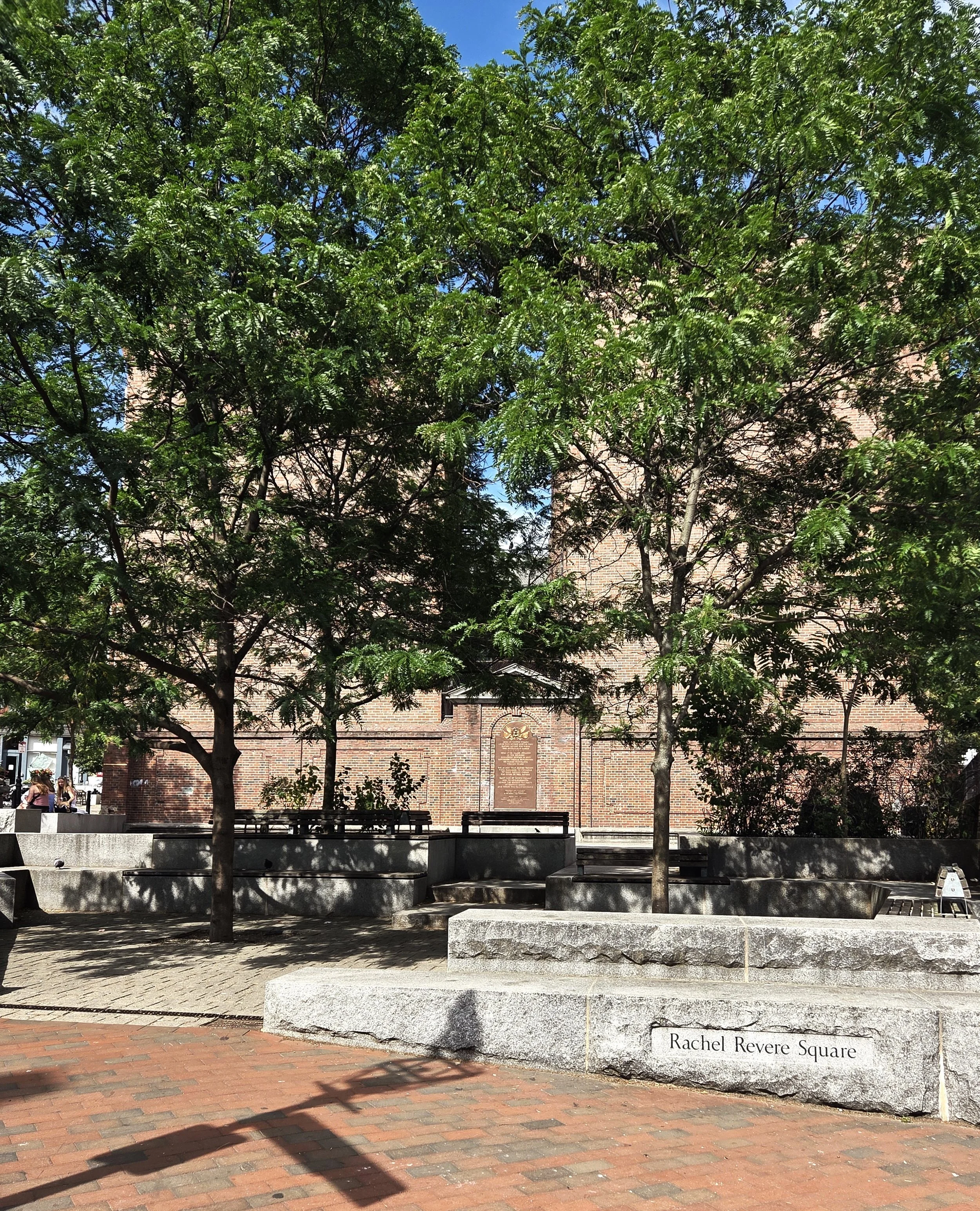
Rachel Revere Square
Across from the Revere and Pierce/Hichborn residences is Rachel Revere Square. Rachel Walker Revere became Paul's second wife following the death of his first wife, Sara, from childbirth complications. This open area commemorates a resilient and tenacious woman, offering a shaded, peaceful spot to chat with friends or enjoy coffee on summer days.
Rachel Revere was far more than the wife of the famous patriot Paul Revere. She was a steadfast partner who managed their household, raised their children, and faced the challenges of war and financial hardship with unwavering resilience. As revolutionary sentiment grew, Paul's political activities took precedence over his businesses, leading to a decline in their income.
While Paul's midnight ride entered the history books, Rachel held their family together, proving that courage wasn’t just found on the battlefield, but also at home.
Rachel single-handedly managed their household and Paul's businesses, cared for their children (both her own and her stepchildren), and tended to Paul's elderly mother, Deborah. Rachel's family responsibilities became particularly challenging during the Boston Siege from 1775–1776, when, during the British occupation, she chose to relocate everyone from the North End to a small home in Watertown, MA, to escape the turmoil of the revolution.
Following the war, in 1800, Rachel and the family sold their house on North Square to move to a place on Charter Street in Boston. This is where Paul could focus on business and provide for his family as the owner of a foundry and a copper-rolling mill. Finally, Rachel had some stability.
Mariners House: 11 North Square
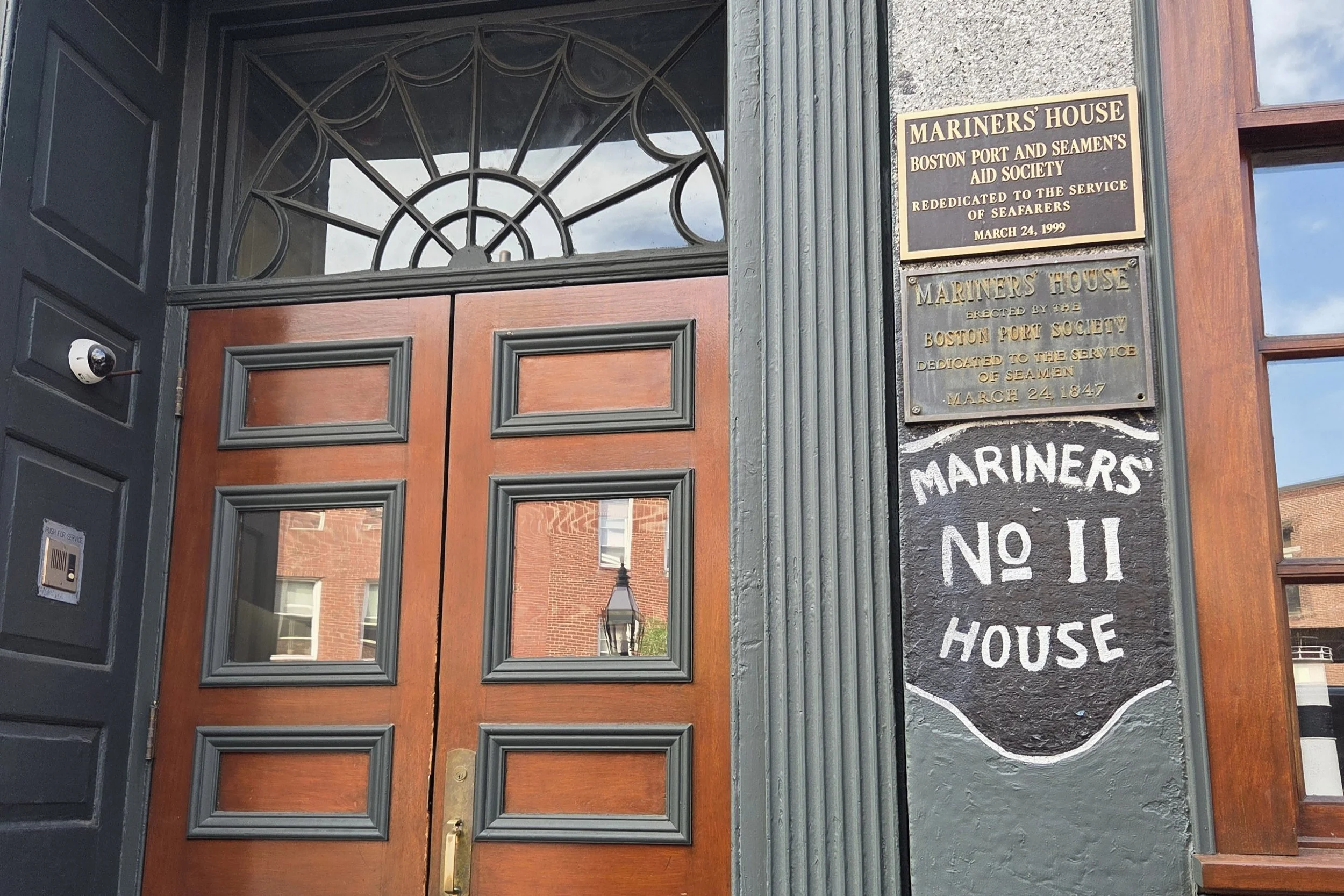
Some of the best places to visit in North End Boston are overlooked by tourists, and you wouldn’t want to miss the Mariners House! While touring this historic neighborhood, you can also step back into the 19th century at this historic establishment. Built in 1847, this historic hotel welcomes guests who are mariners or part of the seafaring community. This specific focus reflects the building's commitment to maintaining its original cultural heritage.
The Boston Port and Seamen's Aid Society was founded in 1829 by Father Edward Thompson Taylor, known as the "Sailor Preacher." As pastor of the Seamen's Bethel in Boston's North End for over 40 years, Taylor delivered sermons so colorful they caught the attention of Charles Dickens. The Seamen's Bethel later became the Sacred Heart Church in 1888 and still stands opposite the Mariners' House in North Square.
Father Taylor's mission was to support sailors and their families in three key ways: enhancing their moral, religious, and general well-being; providing financial assistance to hardworking seafarers in need; and creating educational opportunities for their children. To achieve these goals, he joined forces with Sarah Josepha Hale's Seamen's Aid Society to establish the Mariners' House.
Sarah Josepha Hale was a remarkable historical figure. As a strong advocate for women's education and social reform, she dedicated her life to philanthropy. Her influence touched many aspects of American society—from literature to education—and she played a pivotal role in establishing Thanksgiving as a national holiday (which Abraham Lincoln declared in 1863).
Thanks to the efforts of Father Taylor and Sarah Hale, Boston's 19th-century maritime families received vital care and support. Today, the Mariners House continues its legacy as an affordable haven for seafarers. Together with the Sacred Heart Church, these landmarks stand as reminders of Boston's rich history and enduring community values.
North Square Stories: Public Artwork on the Square
Finally, the vibrant histories of individuals and buildings in this historic neighborhood are tied together by 4 pieces of artwork that share stories of North Square residents and events. From 2017 to 2019, this square was restored and preserved to celebrate its stories and history. On September 23, 2019, the art installations titled “North Square Stories” could finally be enjoyed by the community of North End residents, as well as by curious tourists.
The four bronze sculptures are:
North End Story Map
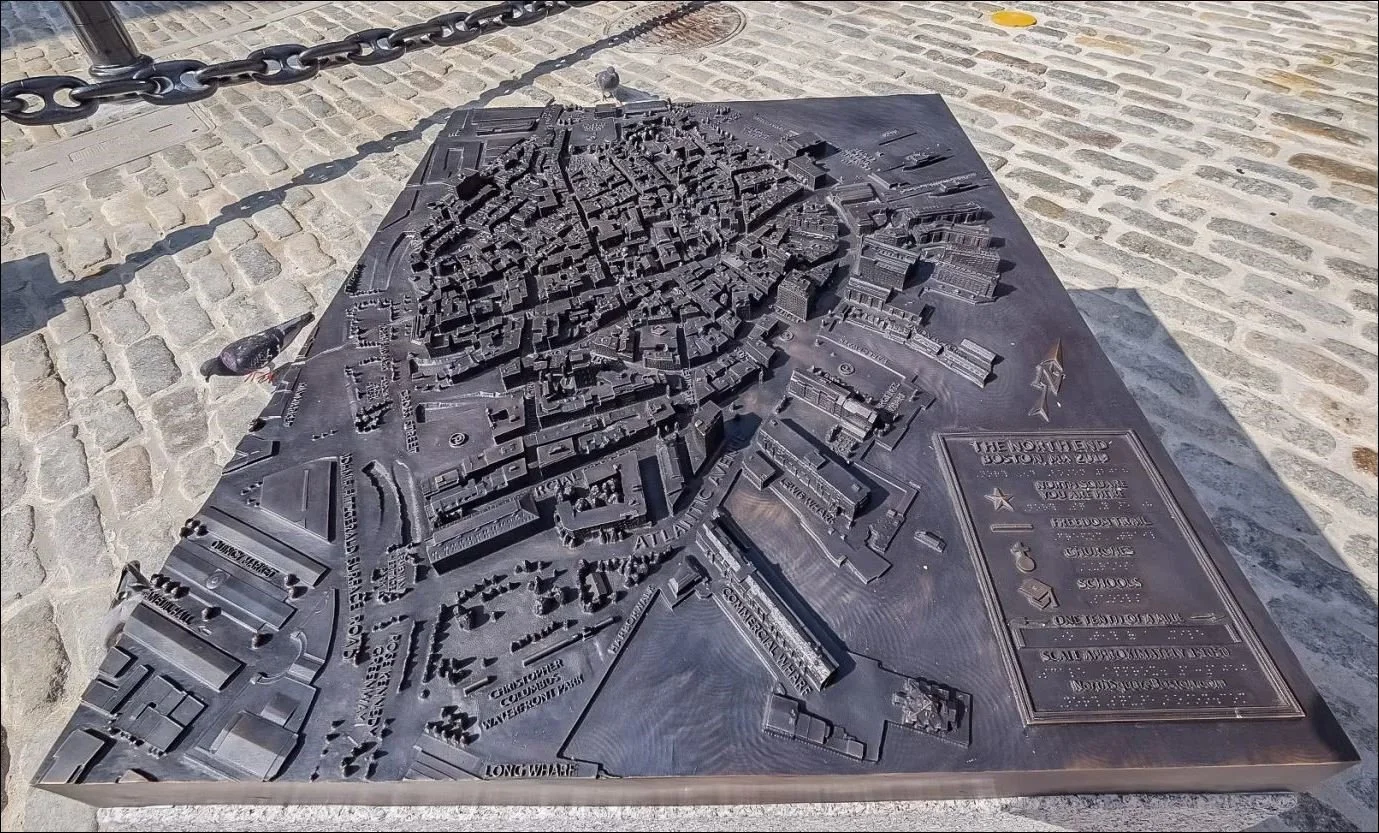
Overview of the North End Neighborhood
The idea of this piece is to show a bird's-eye view of the modern North End neighborhood. Though the map makes this area appear large, it is in fact only 0.36 square miles (0.93 square kilometers). With less than a mile to walk from north to south or east to west, this densely packed neighborhood gives the impression of being more grand. On the bronze map, you can look for local landmarks, trace your fingers along the Freedom Trail, and find hidden items throughout the map to honor the cultural cuisine of immigrants who have called this historic neighborhood home.
1798 North Square View
A beautiful relief sculpture with a raised foreground and a detailed background, highlighting an 18th-century panoramic view to convey the history of North Square, with wharves and the city skyline beyond. It is so interesting to see the people hauling carts to and from the wharves. The top left of the panorama shows just how close the ships and docks were to the residential areas.
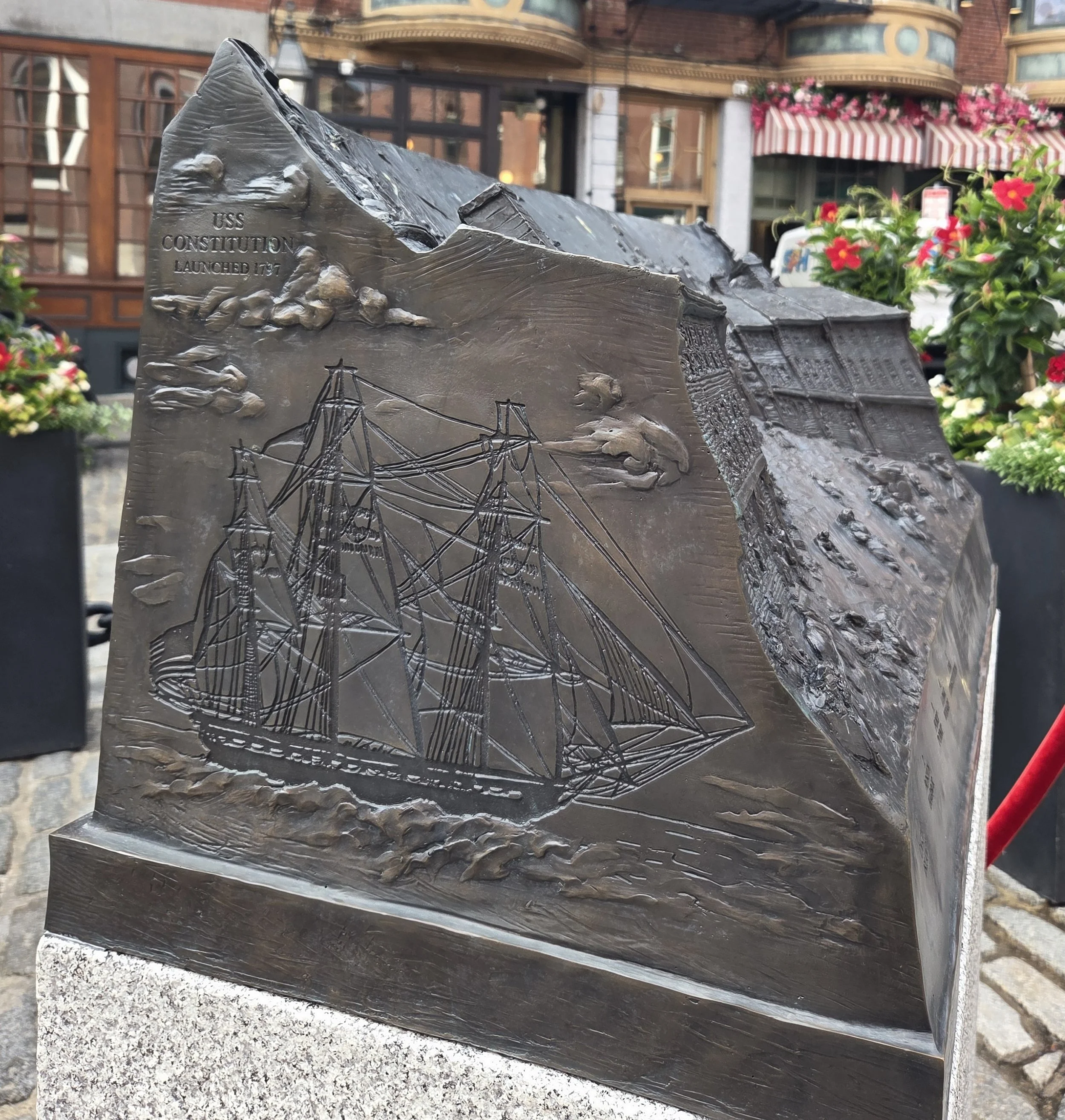
Etching of the U.S.S. Constitution
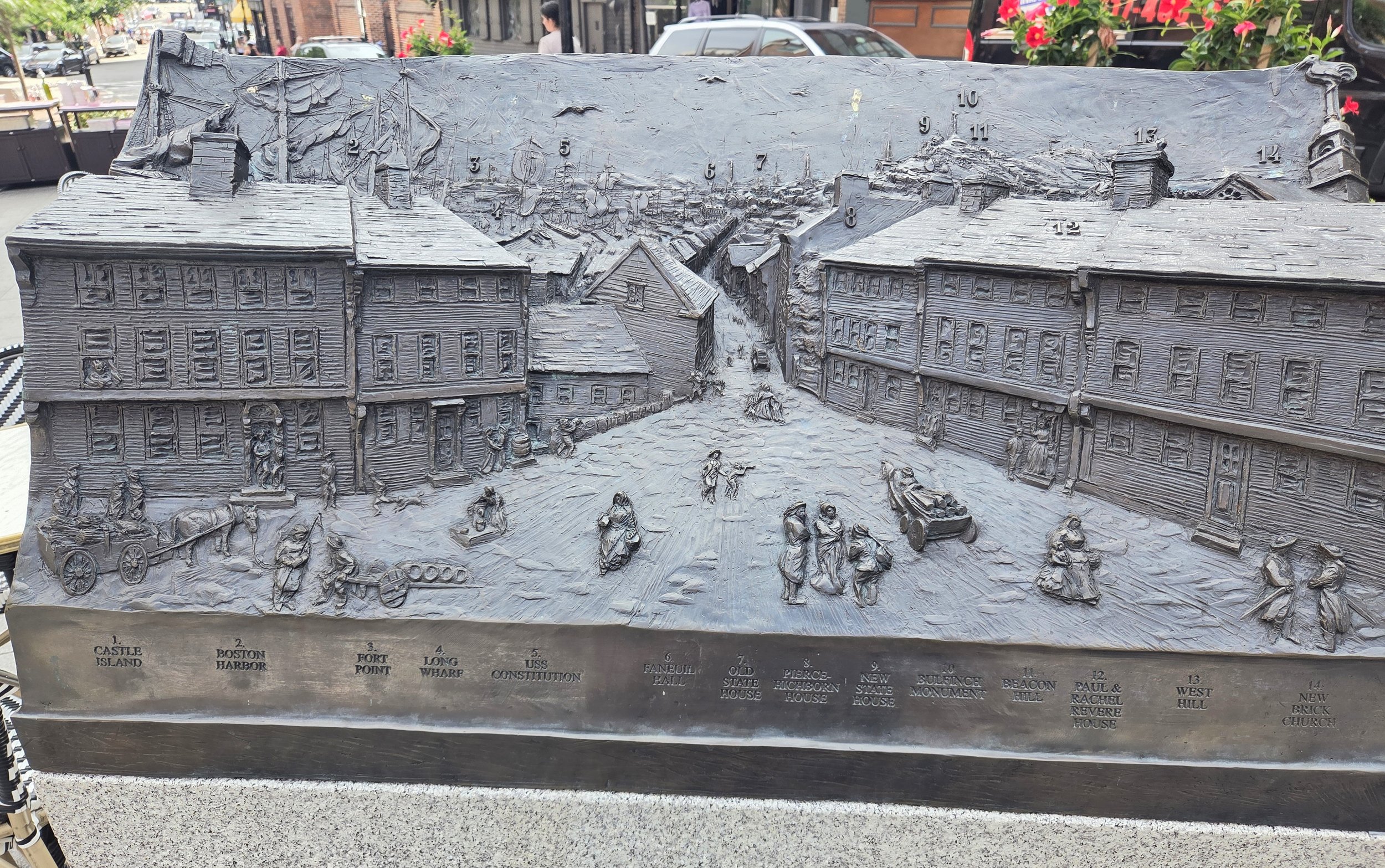
Historic rendering of North Square in 1798
What We Brought With Us
This beautifully detailed sculpture is a diorama capturing a festive procession through North Square, reminiscent of how it might have looked over a century ago, with cultural traditions thriving in the North End. While North Square was predominantly home to Italian immigrants in the early 20th century, the suitcase is adorned with stamps from around the world, symbolizing the rich diversity that now defines this historic neighborhood.
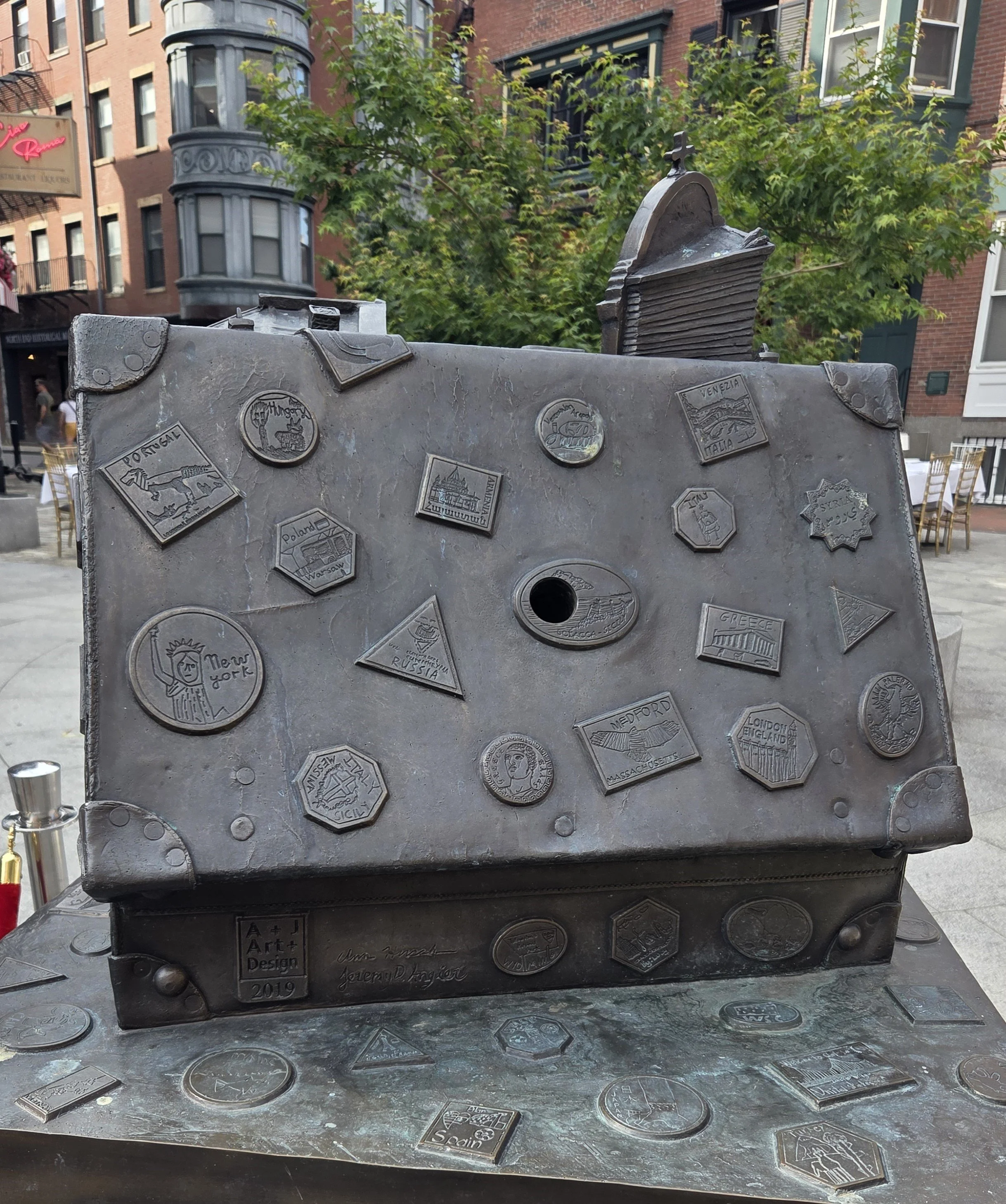
What we brought with us is shown in a suitcase with stamps representing the neighborhood's current heritage.
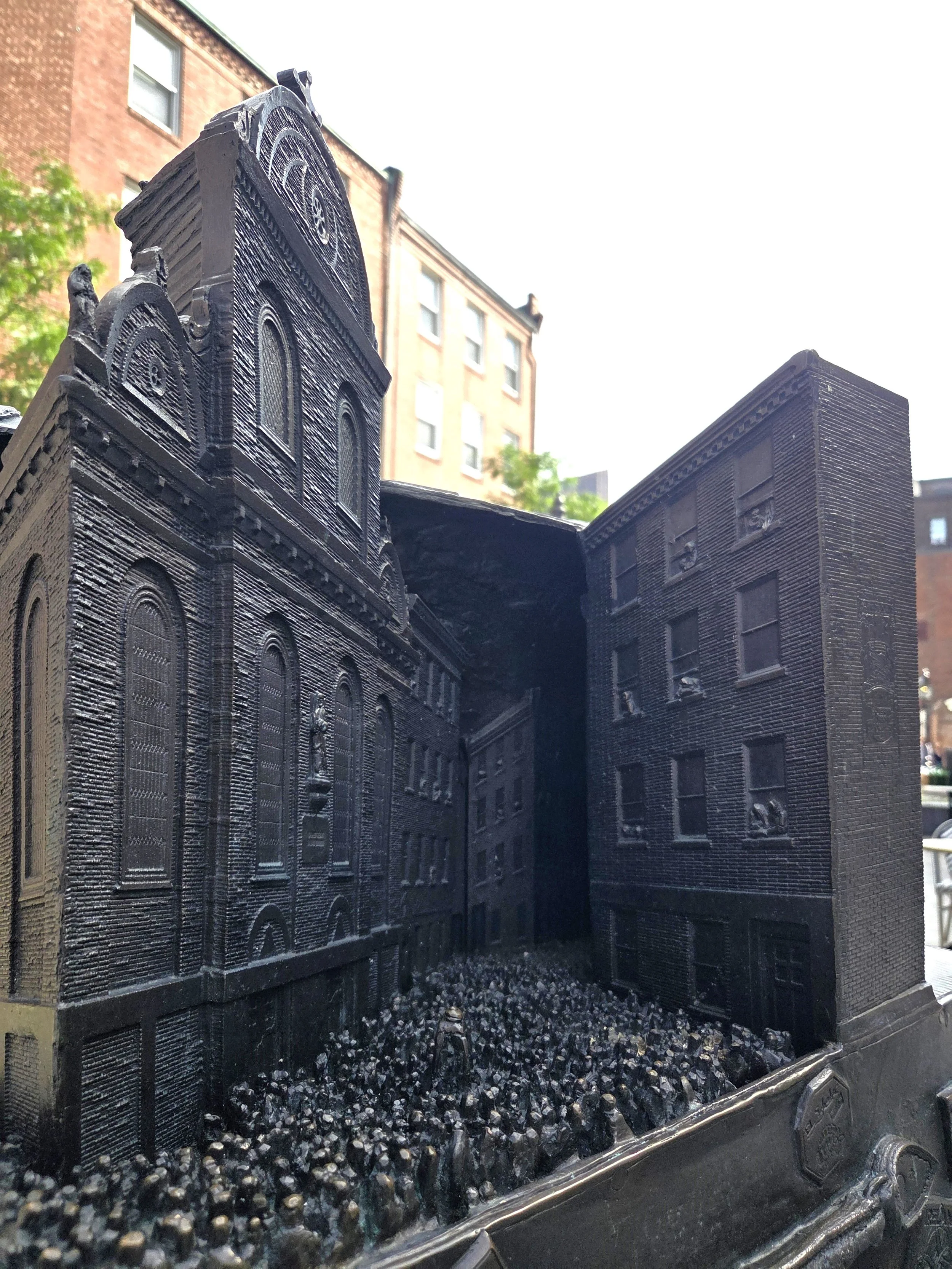
Interior depiction of a catholic feast and celebration of a Saint.
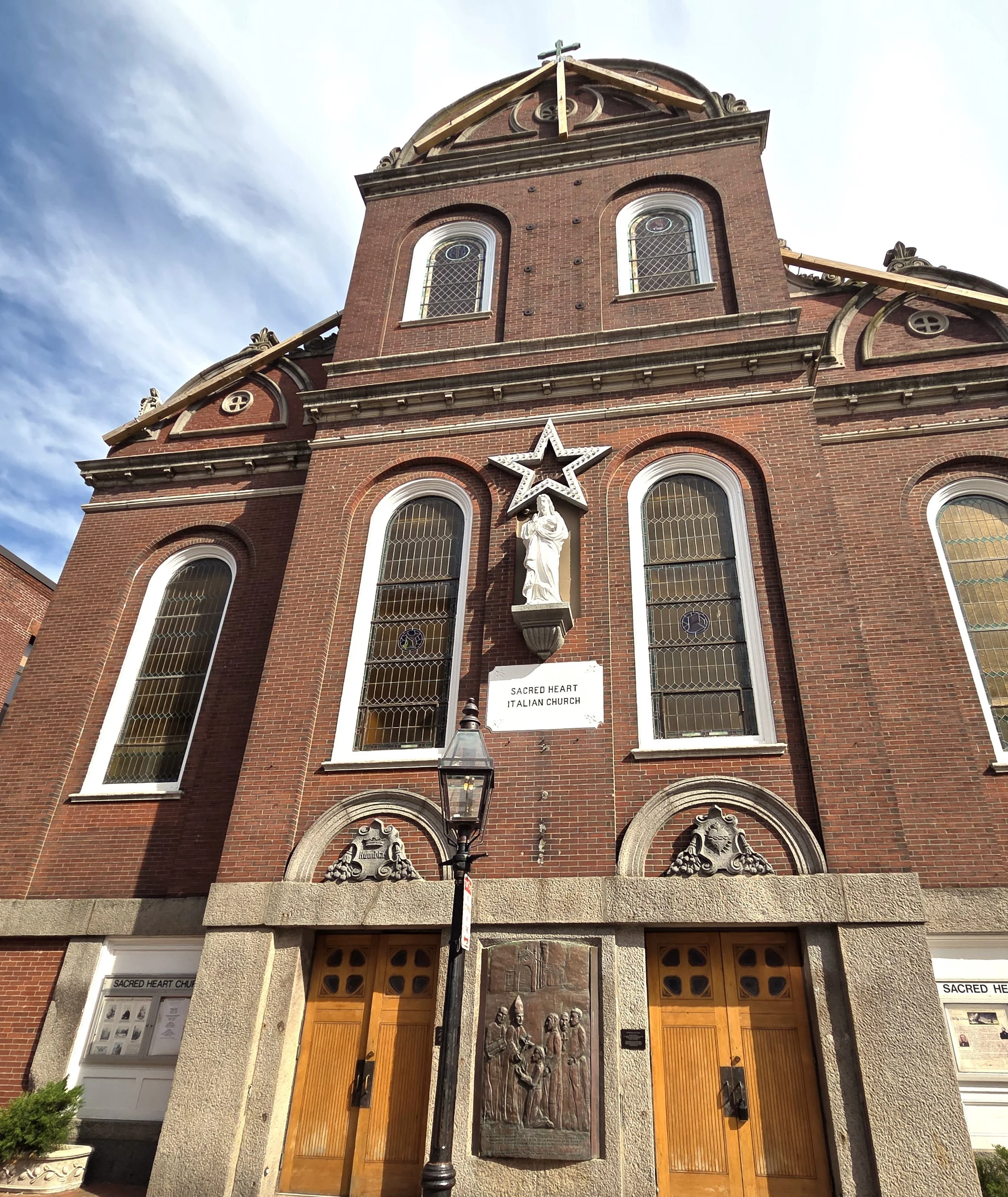
Sacred Heart Italian Church
Fantastical Historical Nautical Instrument
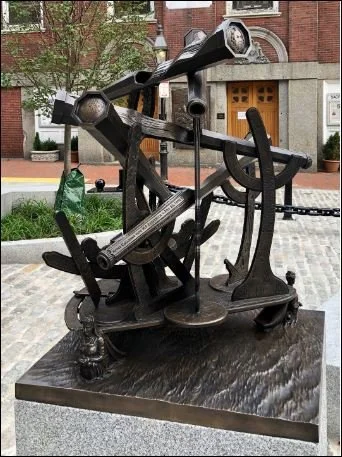
Intersecting nautical devices known as sextants.
This sculpture invites interaction, encouraging you to peer through the scopes of the navigational devices, known as sextants. Each scope is crafted to highlight meaningful maritime stories, with details about the names and events etched along their sides for you to explore. Complete with a working sundial to tell time!
North Square in Summary:
This charming corner of Boston is steeped in history and filled with unforgettable experiences. It is one of the best places to visit in Boston's North End! North Square has been part of the Freedom Trail since the 1950s and was added to the National Register of Historic Places in 1961, recognizing its cultural and historical importance. For nearly four centuries, this square has been a vibrant hub of activity, and your visit helps sustain its spirit!
