
The ‘Clock Tower’: Boston Skyline
The Boston Custom House Tower
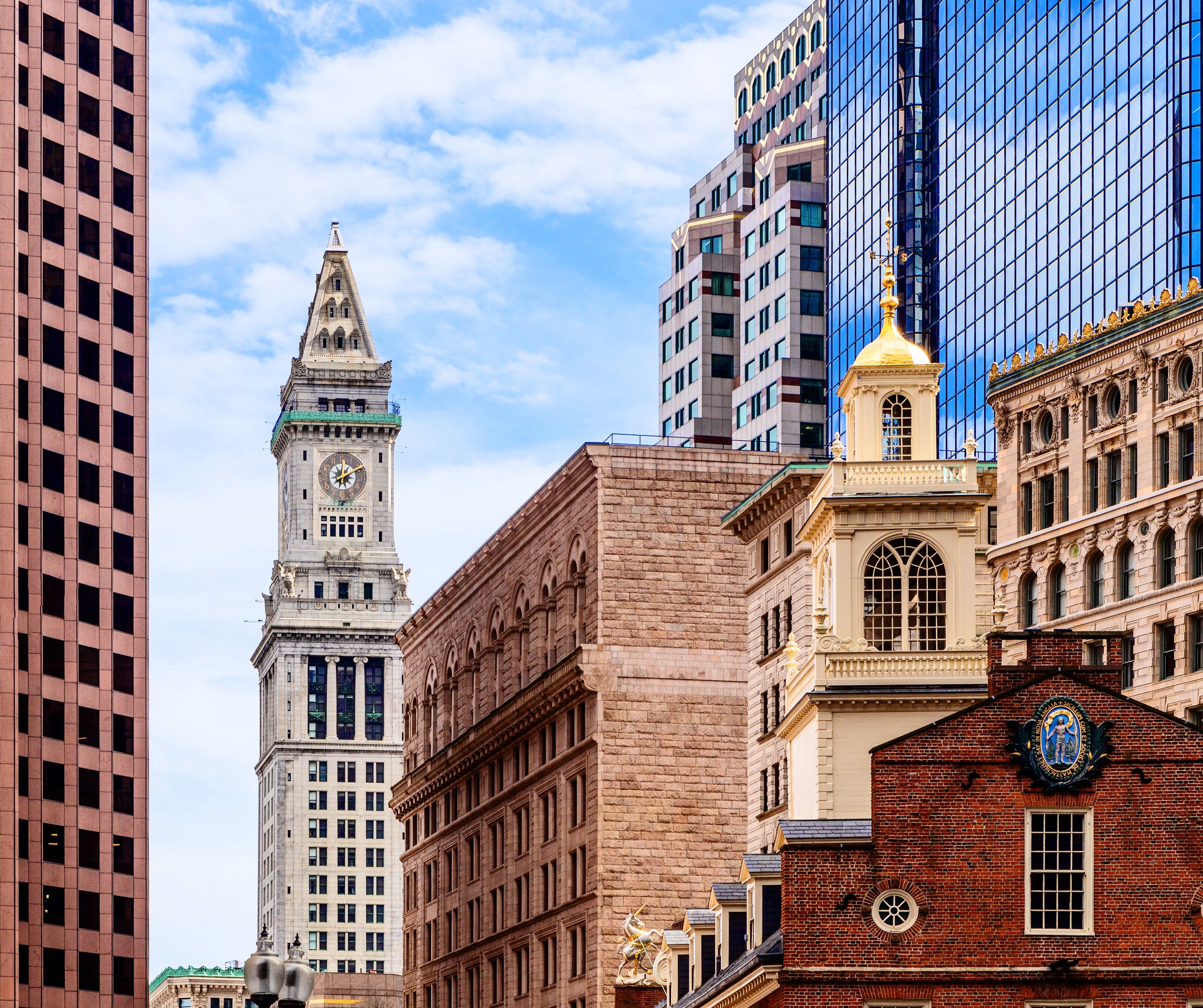
When navigating the winding streets of historic Boston, one building consistently stops travelers in their tracks. The clock tower building is the Boston Custom House Tower, a 496-foot neoclassical masterpiece that served as Boston’s first skyscraper.
Located in Boston’s Financial District, this tower remained Boston’s tallest building for nearly 50 years, until the Prudential Tower was completed in 1964. Today, it is a brilliant example of how the city’s storied past can be successfully adapted for modern life.
Key Facts
Height: 496 feet (34 floors)
Built: 1837-1849 (original), 1913-1915 (tower)
Styles: Greek Revival & Neoclassical
Tallest in Boston: 1915-1964
Clock Faces: Four 22-foot diameter faces
Current Use: Marriott Vacation Club Hotel
Status: National Historic Landmark (1986)
Two Eras of Architecture
The building was actually constructed in two distinct centuries:
The Base (1849): Designed by Ammi Burnham Young, the original Greek Revival structure was built to collect duties during the clipper ship era. It features 36 fluted columns carved from local Quincy granite, each weighing 42 tons. To passersby, the original 1849 building resembles a courthouse. The building’s strategic waterfront location meant ships once moored directly alongside could have their cargo inspected and registered.
The Tower (1915): As shipping volumes grew, architects Peabody & Stearns added the 34-story granite tower. This addition seamlessly blended neoclassical style with the emerging "skyscraper" silhouette of the early 20th century. The new tower was constructed of granite quarried from Rockport, Massachusetts, located on Cape Ann.
In both building efforts for this Customs House and Tower, construction highlighted the region’s ongoing role in supplying quality stone for monumental architecture.
The Iconic Clock
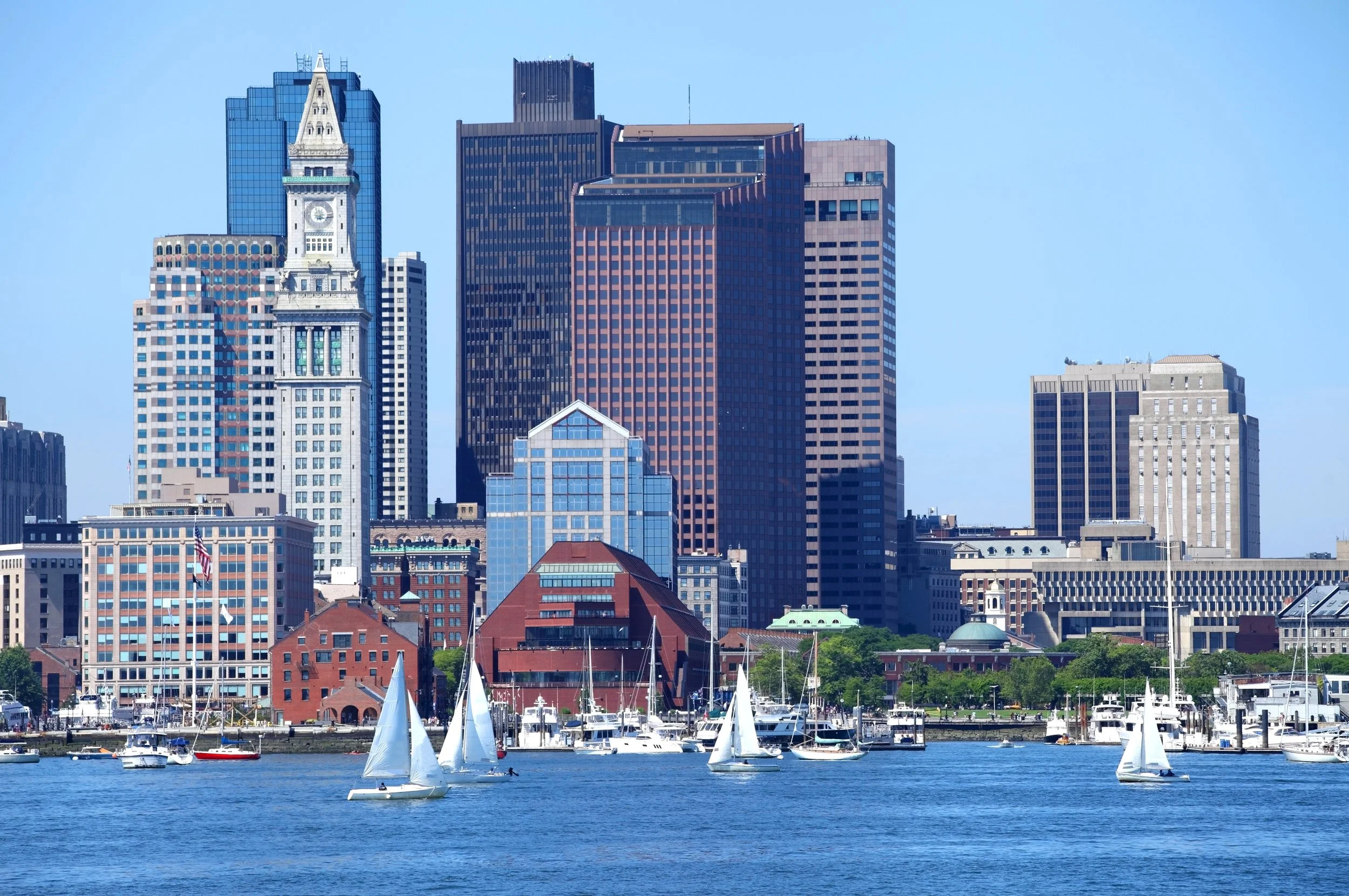
Boston skyline view from the Harbor, including the Customs Tower visible among neighboring buildings and skyscrapers.
The tower is famous for its four clock faces, installed in 1916. Each face is 22 feet in diameter, making it only 6 inches smaller than Big Ben (Elizabeth Tower) in London! Both iconic towers feature clocks at this scale, easily visible from the harbor to the busy streets below.
As this iconic building has been restored and maintained, the original gold-leafed redwood hands, weighing 101 and 141 pounds respectively, were replaced with modern carbon fiber in 2020, to ensure the clock keeps perfect time for another century.
Experience the View
For those seeking the best views of Boston Harbor, the 26th-floor observation deck is a hidden gem. It offers a panoramic perspective of the skyline and the waterfront above the very same waters that once made Boston the busiest maritime port in America.
Public Tours: Sunday–Thursday at 2:00 p.m.
Booking: Call 617-310-6300 (Option 4)
Proximity: Within walking distance of Faneuil Hall and the New England Aquarium.
A Landmark Reborn
For over 130 years, this was the heart of Boston’s economic identity. However, when customs operations moved in 1986, the building sat vacant for over a decade. In 1997, Marriott rescued the landmark and converted it into the Marriott Vacation Club Pulse.
In 1997, Marriott began a major restoration, converting the structure into a Vacation Club hotel while preserving its historic character. This "adaptive reuse" preserved the building’s architectural integrity while adding a ground-floor maritime museum. It stands today not just as a hotel, but as an enduring monument to Boston’s trading heritage, ensuring the building’s original purpose isn’t forgotten.
Still visually commanding despite newer, taller skyscrapers, the tower remains an essential Boston landmark where history, architecture, and function beautifully intersect.
